

I took the necklaces from the vanity in the back bedroom. The ones I used to ask to play with the moment we put our suitcases down. I took the diamond ring she hid in an emptied out pot of cold cream. The one I used to ask to try on every visit. I took the porcelain figurine of the girl in the green dress. The one I used to stare at, imagining who she was. I took photos and teacups and knick knacks and it feels like too much and not enough all at once.
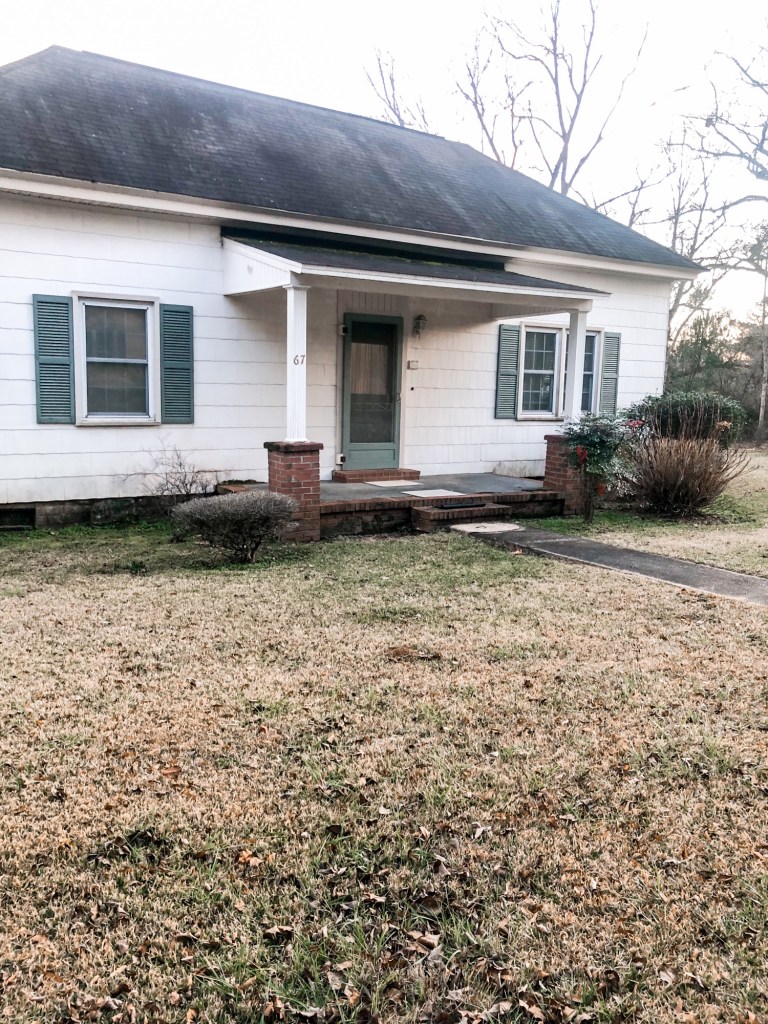
In a tiny, almost nothing town in West Georgia—one of those places that built up around the railroad and then never built anything else—is a house I’ll never see again. A 1920’s bungalow my family owned for over 100 years. My brother and I spent a week there every summer growing up. My Nannie was born in the middle bedroom, married in the formal living room, and took her last breath in the same place she took her first. My Papa was born into violence and left home for the army with his father shouting obscenities at his back. He died in that house calmly and peacefully, with his wife and children in the next room. And I’m so proud of him for it I could bust.
It’s strange, these places that are part of us. And how they die with the people that lived in them. With my grandparents gone, I’ll never be in Woodland again. There won’t be a reason. We laid them to rest in the red clay and with them a facet of my life that exists only in my recollections now. And in whatever I took from the house.
So I’ll take the sound of her syrupy southern accent reading us Uncle Remus stories. I’ll take blackberry jelly because she put it on my PB&J when I was 7 years old and it tasted so good I haven’t eaten grape since. I’ll take the plaintive sound of a train whistle piercing the night, the windows rattling as it thundered past just down the hill from the house, —the sound providing a comforting sense of place. I’ll take races to jump over the concrete sidewalk, me always winning because my legs were long, and then Nathan always winning because he learned to take his boots off and smoked me. I’ll take the taste of her pound cake—begging for more slices for my tea parties because it was so melt in your mouth delicious. I’ll take Papa’s hugs that hurt—I never told him I winced when he squeezed too tight, because I knew somehow that was as soft as he could do it. I’ll take their almost choreographed back and forth—his East St. Louis acid reacting with her spicy Southern wit. Thinking they might actually kill each other this time until she made him rock with laughter. I’ll take trips to the movie theater two towns over, complete with popcorn and arcade rides that looking back now must have cost them at least $100, money they never had but spent on us anyway.
My grandparents were complicated people, and, as an adult, I didn’t always know how to navigate the rollicking rapids that came along with loving them. But when I was a kid, it was simple. And when people are gone, we get to decide the stories we tell. I’m going to tell the good ones. I’ll never see the house again, but it doesn’t really matter. I took all the good stuff.



 ashtonrosecude.com